Guide
What Should a Web Development Agency Actually Do for Your Business?
David Leon Engelmann · September 25, 2026 · 10 min read

A strong website is more than a polished digital brochure. It is often the first place people judge your credibility, explore your offer, and decide whether to contact you, buy from you, or keep looking. Choosing the right web development agency helps you turn that first impression into a practical growth asset: fast, usable, secure, easy to manage, and aligned with how your business actually works.
The challenge is that many agencies sound similar at first glance. They may all promise modern design, clean development, and better online visibility. The difference appears when you look at their process, strategic thinking, technical depth, and ability to connect design, development, and marketing into one coherent digital experience.
What should a web development agency actually do for your business?
A web development agency should help you plan, design, build, launch, and improve a website or digital product that supports measurable business goals. That means the agency is not only responsible for visual design or code; it should also understand your audience, content needs, user journeys, search visibility, integrations, performance, and long-term maintenance.
In practice, the right partner helps you answer questions before a single layout is designed. Who is the website for? What should visitors do next? Which pages need to rank in search? What content should be easy for your team to update? What technical decisions will still make sense when your traffic, product range, or service offering grows?
A capable digital agency may bring together several services, including:
- Website strategy: defining goals, audience segments, page structure, conversion paths, and content priorities.
- UX and UI design: creating intuitive layouts, navigation, visual hierarchy, mobile experiences, and brand consistency.
- Web development: building the front-end and back-end systems that make the site functional, stable, and scalable.
- CMS implementation: giving your team a practical way to update content without relying on developers for every small edit.
- SEO foundations: structuring pages, metadata, URLs, headings, internal links, and performance factors so the site can be discovered.
- Analytics setup: tracking meaningful actions such as form submissions, calls, downloads, sign-ups, or purchases.
- Hosting and maintenance guidance: helping you keep the site secure, updated, backed up, and reliable after launch.
When these services are handled separately with no shared strategy, the result can feel fragmented. The design may look attractive but fail to convert. The development may work technically but be difficult to update. The marketing may drive traffic to pages that do not answer real customer questions. A good agency reduces those disconnects.
The strongest agencies connect strategy, design, and technology
A website project should begin with understanding, not decoration. Before choosing a website design agency, pay attention to how deeply they investigate your goals. Do they ask about your sales process, customer objections, competitors, internal workflows, and future plans? Or do they move straight into colors, templates, and timelines?
Good design is not just about making a site look current. It guides attention, removes friction, and makes decisions easier for visitors. For example, a service business may need clear lead-generation pages with trust signals and concise calls to action. An ecommerce brand may need product filtering, checkout clarity, and strong mobile performance. A B2B company may need deeper content, case-study structures, and integration with marketing or CRM tools.
The technical side matters just as much. A site that loads slowly, breaks on mobile, lacks accessibility basics, or cannot scale with new features will limit the value of even the best visual concept. This is where a web design agency with development depth has an advantage over a purely visual provider. The team can design with real implementation in mind, avoiding ideas that look impressive in mockups but become expensive or fragile in production.
For businesses comparing local and international options, location can also play a role. Searching for web design Tbilisi, for example, may be useful if you want a team familiar with the regional market, local communication expectations, or a specific business environment. At the same time, location should not be the only filter. The best choice is the agency that understands your goals, can show relevant work, and has the technical ability to deliver.
Template-based and custom websites serve different needs
One of the most important early decisions is whether your project needs a template-based build, a semi-custom design, or a fully custom digital product. None of these choices is automatically right or wrong. The best option depends on your budget, timeline, complexity, brand needs, and future growth plans.
A template can be a practical starting point for smaller businesses that need a professional presence quickly. It may work well for a simple brochure site, a basic portfolio, or an early-stage project where speed and cost control matter most. The tradeoff is that templates can limit flexibility, create design similarities with other sites, and become harder to adapt when your needs become more specific.
A custom site gives you more control over user experience, brand expression, content structure, and technical architecture. This is often better for companies with complex services, unique workflows, integrations, ecommerce requirements, multilingual content, or a strong need to stand out. It usually requires more planning, collaboration, and investment, but it can provide a stronger foundation for long-term growth.
Use this comparison as a starting point:
| Option | Best for | Watch out for |
|---|---|---|
| Template website | Simple sites, fast launches, limited budgets | Less uniqueness, design constraints, possible feature limitations |
| Semi-custom website | Growing businesses that need some flexibility | Requires clear scope to avoid patchwork decisions |
| Fully custom website | Complex brands, advanced functionality, long-term scaling | Needs a stronger discovery process and more collaboration |
A trustworthy web development agency will not push the most expensive option by default. Instead, it should explain the tradeoffs and recommend the level of customization that fits your current business while leaving room for what comes next.
How can you evaluate an agency before signing a contract?
You can evaluate an agency by reviewing its portfolio, process, technical capabilities, communication style, and ability to explain why its recommendations fit your goals. The best agencies make their thinking visible: they do not simply show attractive screenshots, but explain the problem, the approach, and the business purpose behind the finished work.
Start with the portfolio, but look beyond appearance. Ask whether the sites are easy to navigate. Check if the messaging is clear. Visit the live websites if possible and test them on mobile. A beautiful desktop homepage is not enough if service pages feel confusing, buttons are hard to tap, or content takes too long to understand.
Client testimonials can also be useful, but they should not be your only evidence. Look for comments about reliability, collaboration, problem-solving, responsiveness, and post-launch support. A polished launch is important, but the working relationship often matters just as much as the final design.
Before making a decision, ask practical questions such as:
- What does your discovery process include? A serious agency should learn about your goals, users, competitors, content, and technical needs before estimating everything in detail.
- Who will work on the project? Clarify whether you will have access to strategists, designers, developers, project managers, SEO specialists, or external contractors.
- Which technologies do you recommend, and why? The answer should connect technology choices to your needs, not just personal preference.
- How do you handle revisions and approvals? A clear process prevents confusion and protects timelines.
- What happens after launch? Ask about training, maintenance, updates, monitoring, and support.
- How will success be measured? The agency should help define useful indicators, whether that means leads, sales, engagement, speed, search visibility, or content management efficiency.
This conversation will reveal how the agency thinks. If their answers are vague, overly technical without context, or focused only on aesthetics, keep looking.
Full stack capability supports scalable digital products
Full stack web development means the team can work across both the front-end experience users see and the back-end systems that power functionality behind the scenes. For many business websites, this matters because the front end and back end are deeply connected. A page may look simple, but it could depend on content management, databases, user accounts, payment systems, booking tools, third-party integrations, or custom workflows.
A software development company with full stack capability can be especially valuable when your website is more than a marketing site. If you need a customer portal, custom dashboard, product configurator, internal management tool, API integration, or complex ecommerce feature, you need more than visual design. You need planning around data, security, performance, maintainability, and future development.
This does not mean every project needs a large engineering team. A small business website may be perfectly served by a lean, well-built CMS implementation. But if your site will become a central business system, technical architecture should be discussed early. Fixing poor foundations later is usually more difficult than making thoughtful decisions at the start.
Strong full stack teams can also collaborate better across disciplines. Designers understand what is feasible. Developers understand the user experience goals. Project managers can identify dependencies before they become delays. The result is a smoother process and a website that feels coherent rather than assembled from disconnected parts.
Marketing integration turns a website into a growth channel
A website should not live in isolation from your broader marketing. Search engines, social media, paid campaigns, email newsletters, offline sales conversations, and customer support all shape how people arrive at your site and what they expect when they get there. A digital agency that understands these connections can build pages that support the full customer journey.
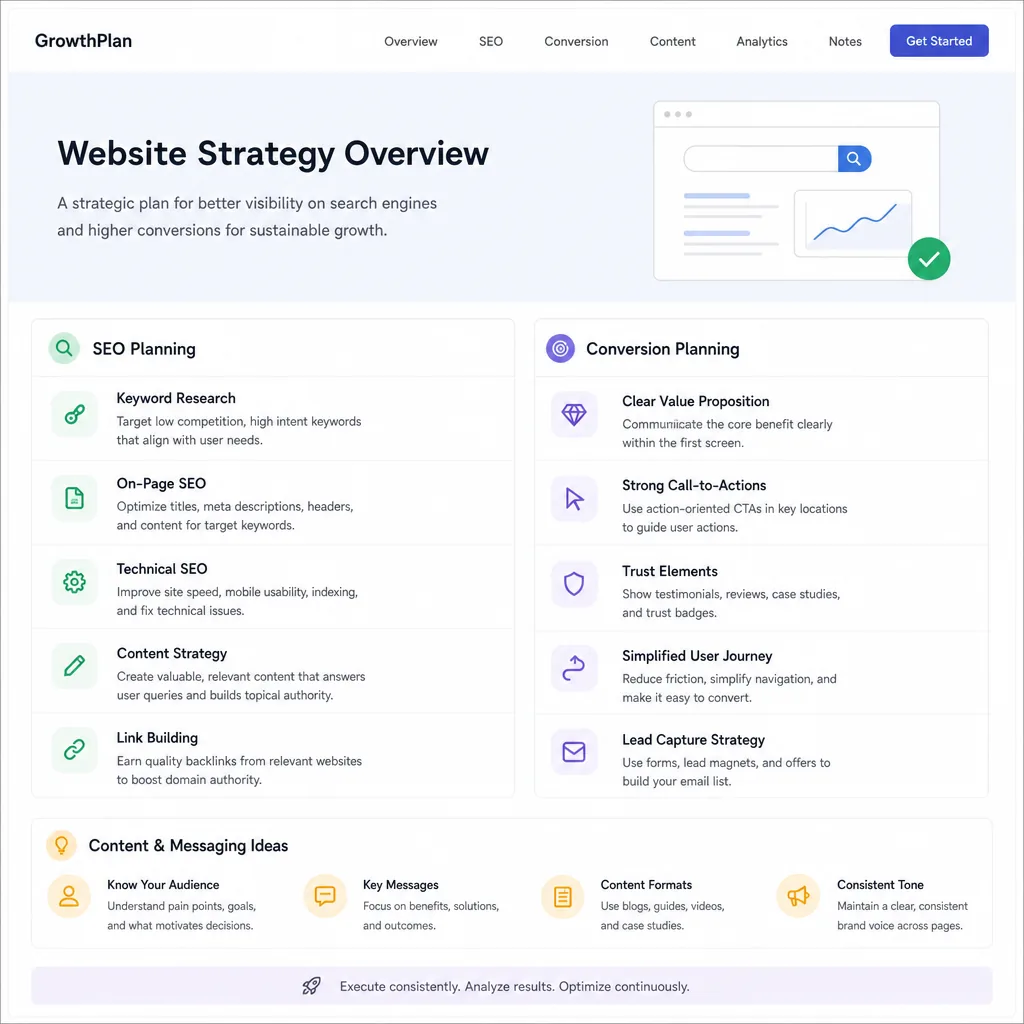
For SEO, this means more than adding keywords after the site is designed. Your page structure, internal linking, content hierarchy, technical performance, and metadata should be considered during planning. If you want to attract traffic for service-related searches, the site needs pages that answer those searches clearly. If you serve multiple markets, your content and structure may need to reflect those differences.
For conversion, the agency should help you clarify what each page is supposed to accomplish. A homepage may guide visitors toward key services. A service page may answer objections and encourage contact. A blog post may educate early-stage prospects and link them to relevant solutions. A landing page may focus on one campaign with a single clear action.
Useful marketing-focused website elements include:
- Clear calls to action that match the visitor’s stage of decision-making.
- Contact forms that ask for enough information without creating unnecessary friction.
- Service pages built around real customer problems, not only internal company categories.
- Analytics events that track meaningful engagement, not just total visits.
- Content structures that make future publishing easier and more consistent.
- Trust elements such as testimonials, process explanations, certifications, or project examples when available and accurate.
When marketing is part of the build from the beginning, the website is more likely to support visibility, credibility, and lead generation after launch.
What warning signs should you avoid?
You should be cautious if an agency promises results without understanding your business, avoids clear explanations, offers no defined process, or treats your website as a one-time design task instead of a long-term digital asset. Red flags often appear in communication before they appear in the work itself.
Be careful with agencies that cannot explain what is included in the project scope. If content, SEO, mobile design, testing, integrations, revisions, training, or maintenance are unclear, you may face surprise costs or delays later. A professional proposal should make responsibilities visible for both sides.
Another warning sign is a portfolio that looks repetitive across different clients. Consistency in quality is good; sameness in strategy is not. Your business should not be squeezed into a design pattern that ignores your audience, offer, or growth plans.
You should also question any agency that talks only about trends. Modern visuals matter, but trends change quickly. Your website needs a durable structure, clear messaging, manageable content, and reliable performance. A site built only to look fashionable may age faster than one built around user needs and business goals.
A practical selection checklist
When comparing agencies, it helps to use a simple checklist rather than relying on instinct alone. The right partner should feel creative, organized, technically competent, and commercially aware.
Before you choose, confirm that the agency can:
- Explain how the website will support your business goals.
- Show relevant work or a clear ability to handle similar challenges.
- Recommend a suitable platform or technology stack with understandable reasoning.
- Balance design quality with usability, speed, accessibility, and maintainability.
- Provide a transparent scope, timeline, and collaboration process.
- Discuss SEO and content structure before development is complete.
- Plan for analytics, testing, launch support, and post-launch improvements.
- Communicate in a way that is clear, responsive, and practical.
If two agencies look similar, choose the one that asks better questions. Strong questions are a sign that the team is thinking about outcomes, not just deliverables.
The right partner builds for where your business is going
Choosing a web development agency is ultimately about trust, fit, and future readiness. You need a team that can translate your goals into a website that works for visitors, supports your internal team, and adapts as your business evolves. That may mean working with a website design agency for a focused redesign, a web design agency for brand-led digital presence, a digital agency for integrated marketing support, or a software development company for more complex functionality.
The best choice is not always the biggest agency or the cheapest proposal. It is the partner that understands your priorities, explains tradeoffs honestly, and builds with both today’s launch and tomorrow’s growth in mind. Take time to compare process, technology, communication, and strategic thinking. A thoughtful decision now can save budget, reduce friction, and give your business a stronger digital foundation for years to come.